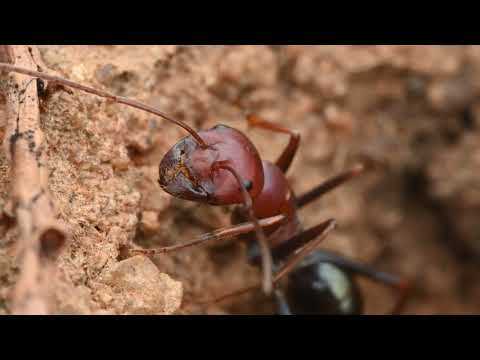
Note an ant, but also an interesting social insect, Nasutitermes walkeri, commonly known as the cone-headed tree termite, is a fascinating species of arboreal termite native to eastern New South Wales and southeastern Queensland, Australia. The soldiers of Nasutitermes walkeri are easily recognizable by their syringe shaped heads and yellowish-brown bodies usually with a darker head. Measuring between 5 and 7 mm (0.20 and 0.28 in) in length, these termites play a crucial role in the ecology of their habitat.
Distribution and Habitat
Endemic to eastern Australia, Nasutitermes walkeri is primarily found in eastern New South Wales and southeastern Queensland. This species thrives in diverse environments, ranging from mountains to coastal regions, particularly in scrublands and wooded areas. The adaptability of Nasutitermes walkeri to various habitats is a testament to its resilience and ability to establish colonies in different ecological niches. Initially, colonies are established in the crowns of trees, taking advantage of sites with timber damage from fire or decay. As the colony matures, a more substantial nest is constructed higher up in the tree, sometimes reaching heights of 20 meters (66 feet) above the ground.
The nests exhibit a thin, papery surface on the outside, while the internal structure is fragile. This fragility is a unique feature that sets Nasutitermes walkeri apart from other termite species. The termites primarily feed at ground level, creating tubes down the tree trunk. Additionally, they construct surface tubes and subterranean passages through the soil to access wood for sustenance.
Ecological Relationships
Nasutitermes walkeri plays a vital role in its natural habitat, aiding in the decomposition of dead wood and contributing to nutrient cycling.
The nests of Nasutitermes walkeri, often found on ironbark, stringybark and gum trees, serve as nesting sites for other wildlife, including kingfishers. This unique ecological relationship highlights the interconnectedness of species in the ecosystem, with Nasutitermes walkeri contributing to the availability of nesting locations for other organisms.