Sunday, December 10, 2023

Muscleman tree ants : Podomyrma ants

Morphology and Identification

Podomyrma ants boast distinctive features. Their antennae, consisting of 11 segments, set them apart. The petiole and postpetiole exhibit unique characteristics, appearing either low and rounded or barrel-shaped. Notably, the petiole may bear one to three small spines or teeth. The middle and hind legs showcase markedly swollen femora and often tibiae. These morphological traits serve as key identifiers within the Myrmicinae subfamily.


Habitat and Behavior

Podomyrma occupy solid dead wood, beetle burrows, cracks in trunks, twigs, vines, mangroves, large seeds, galls, and occasionally, the ground. Foraging primarily occurs on tree trunks, around tree bases, in litter, and on grasses, especially during evenings. Despite their potential abundance, these ants often elude detection due to their arboreal tendencies.

Research indicates that Podomyrma ants typically form medium-sized colonies, with over 200 individuals. Nesting both underground and arboreally, these ants exhibit omnivorous behavior and cooperative foraging.

Ant raiding ants : Lioponera ants raid other ants


Lioponera, a genus within the Hymenoptera order, Formicidae family, and Dorylinae subfamily, is characterized by its diverse range of 76 species. Established by Mayr in 1879, the genus's type species is Lioponera longitarsus.


Identification

Workers of Lioponera exhibit distinct features, including a unique cuticular flange on the hind coxa, dorsolateral margination on at least the anterior half of the petiole, and a specific development of the metatibial gland. Male characteristics include 13-segmented antennae and the absence of the costal vein (C) in the fore wing.


Biology

Lioponera species are predatory, often preying on other ants. In Australia, there's evidence of a preference for Pheidole, while in Japan, some species target Monomorium. Behavioral observations suggest a non-phasic reproductive cycle, with queens continuously laying eggs, and varied brood stages coexisting in a colony.


Distribution and Habitat:

With diverse habitats ranging from soil and under stones to rotting logs and hollow twigs, Lioponera nests are adaptable. The genus is found in different regions, and keys for species identification are available for the Afrotropical region, southwestern Australian Botanical Province, and New Caledonia.

While the mean colony size remains unknown, Lioponera colonies are not parasitic, with nesting sites both hypogaeic and arboreal. As predators, they forage on the ground.

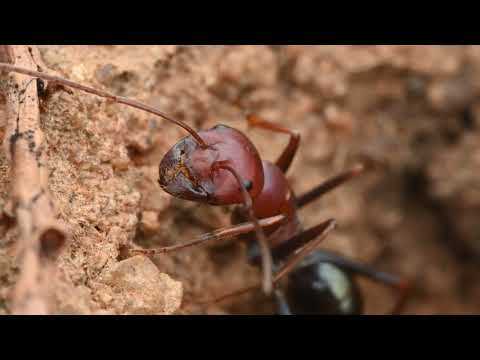
Melophorus rufoniger - the red and black honeypot ant

Melophorus rufoniger is a species of ant native to Australia. These ants exhibit a diverse range of morphologies, with distinct worker subca...