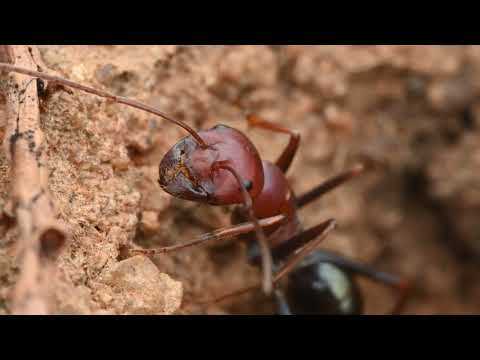
Amblyopone australis, a fascinating ant species native to Australia, exhibits a diverse range of biological characteristics that contribute to its ecological significance. Understanding its biology provides valuable insights into its role within the ecosystem.
Feeding Habits: A. australis is a discerning feeder, targeting a variety of soft-bodied arthropods. This feeding behavior underscores its ecological role in maintaining the balance of arthropod populations within its habitat.
Nesting Behavior: The nesting behavior of A. australis adds an interesting dimension to its biology. This species is known for establishing nests in rotten logs situated above ground. This choice of nesting habitat highlights its adaptability to diverse environmental conditions.
Habitat: Within the southwestern Australian Botanical Province (SWBP), A. australis finds its niche under logs and rocks, with a notable presence in the hills surrounding Perth. This distribution underscores the species' preference for specific ecological niches within its broader habitat.
Polygyny: A. australis exhibits facultative polygyny, a reproductive strategy where a colony may have multiple queens. This characteristic adds complexity to the social structure of the species and influences its reproductive dynamics.
Abundance: Despite having a limited invasive nature, the abundance of A. australis varies based on ecological records. This variability emphasizes the importance of ongoing ecological monitoring to understand population dynamics and potential impacts on local ecosystems.
Geographical Distribution: A. australis boasts a broad distribution throughout Australia, with significant records in the Darling Range and near the south coast within the SWBP, Western Australia. This widespread distribution hints at the species' adaptability to diverse geographical and environmental conditions.
Elevation Range: The species showcases versatility in its elevation preferences, having been observed at different altitudes. Records indicate its occurrence in the range of 10-100 meters above sea level, further highlighting its adaptability to varying terrains.
Foraging and Nesting Habitat: A. australis demonstrates a strong association with rotten logs for both foraging and nesting activities. This behavior suggests a reliance on decaying wood as a crucial component of its ecological niche.
Worker Polymorphism: Workers of A. australis exhibit pronounced queen–worker dimorphism in body size. This morphological diversity may confer advantages, especially for larger individuals, in tasks such as digging galleries in rotten logs.
Feeding: The diet of A. australis includes a diverse range of soft-bodied arthropods, showcasing its role as a generalist predator within its ecosystem.
Flight Period: A. australis engages in flight during various months of the year, a behavior tied to its reproductive cycle. This periodic flight is crucial for dispersal and the establishment of new colonies.
See https://www.antwiki.org/wiki/Amblyopone_australis for more infos.



No comments:
Post a Comment