The green-head ant (Rhytidoponera metallica) was first described by the British entomologist Frederick Smith in 1858, this metallic ant has captured the attention of scientists and enthusiasts alike. Let's delve into the biology and unique features of the green-head ant, exploring its habitat, behavior, and its relationship with both the environment and humans.
Taxonomy of the green-head ant (Rhytidoponera metallica)
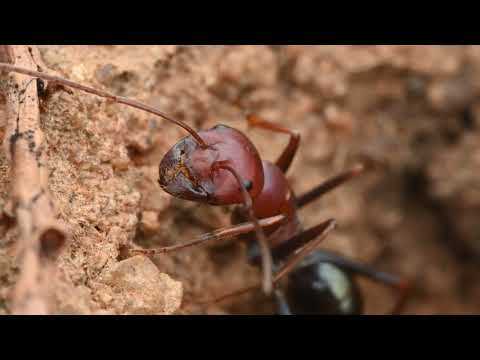
Measuring between 5 and 7 mm, these ants boast a distinctive metallic appearance, ranging from green to purple or even reddish-violet. Both queens and workers exhibit this captivating coloration, with males being the smallest members of the colony. The green-head ant belongs to the genus Rhytidoponera in the subfamily Ectatomminae, showcasing its taxonomic uniqueness within the diverse world of ants.
Distribution and Habitat:
One of the most widespread insect species in Australia, the green-head ant conquers various habitats, including deserts, forests, woodlands, and urban areas. Surprisingly absent in Tasmania, these ants have also made their presence known in New Zealand, establishing several populations after being introduced. Their adaptability allows them to nest underground, under logs, stones, and shrubs, and even within termite mounds. They exhibit an uncanny resilience, being among the first insects to emerge in burnt-off areas after wildfires.
Behavior and Ecology:
The green-head ant is a diurnal species, active throughout the day, engaging in predation on arthropods and small insects. They also collect sweet substances like honeydew from sap-sucking insects, contributing to their role in seed dispersal. Acting as nature's pest control, they prey on agricultural nuisances such as beetles, moths, and termites.
A fascinating aspect of their behavior is their reproductive strategy. Green-head ant workers are gamergates, capable of reproducing with winged males. This unique feature diminishes the significance of queens in colonies, with nuptial flights occurring in spring. Colonies can also form through budding, where a subset of ants leaves the main colony for an alternative nest site.
Color Variation and Adaptations:
The green-head ant showcases remarkable color variation across different regions of Australia. From the typical green in the Flinders Ranges to dark purple in Alice Springs, their color palette is a testament to their adaptability. In some areas, colonies exhibit two distinct color forms, hinting at potential genetic diversity within the species.
Foraging and Seed Dispersal:
As foragers, green-head ants exhibit diverse dietary preferences. They scavenge for animal material, insects, and small arthropods, using their venomous sting to incapacitate their prey. Moreover, they play a crucial role in seed dispersal, favoring seeds with low mechanical defense properties. Their contribution to the ecosystem extends to the relocation of seeds, benefiting plant species like the myrtle wattle and golden wattle.
Life Cycle and Reproduction:
Green-head ant colonies can initiate through budding, where a subset of the colony establishes a new nest. The species displays age caste polyethism, with younger workers engaging in nursing duties while older ones forage. Mating is a unique spectacle, with males mating with workers, and the rarity of virgin queens suggests an evolutionary shift where workers assume reproductive roles.
This other colony has little parasitic beetles living inside:
Human Interaction with the green-head ant (Rhytidoponera metallica)
Despite their captivating features, the green-head ant is not without consequences for humans. Possessing a venomous sting, their bite can induce short-lived but intense pain. In extreme cases, sensitive individuals may experience anaphylactic shock. However, their role as natural pest controllers in agriculture highlights a potential benefit for human interests.



No comments:
Post a Comment