Myrmecia nigrocincta, colloquially known as the jumper ant or jumping jack, belongs to the Myrmecia genus, and its taxonomy was meticulously documented by Frederick Smith in 1858. This species thrives abundantly in the eastern regions of Australia, displaying remarkable characteristics that set it apart from other ants.
Physical Characteristics and Taxonomy
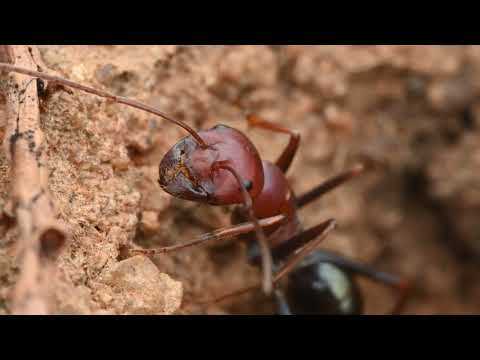
With a substantial size, some workers reaching lengths exceeding 15 mm, M. nigrocincta boasts a distinct orange-red and black pattern, distinguishing it from its Myrmecia counterparts. The gamergate gene, a unique feature, empowers worker ants to reproduce, either alongside a queen or in her absence. The queen's wings are rudimentary, rendering her flightless. Taxonomically, M. nigrocincta forms a paraphyletic and basal assemblage, as observed in phylogenetic studies (Smith, 1858).
Distribution and Habitat
Abundant in the temperate bushlands of eastern Australia, M. nigrocincta colonies flourish in diverse environments, from dry to semi-dry forests to sclerophyll woodlands. Its preference for tropical climates and warm temperatures is evident in its widespread distribution, spanning elevations from 80 to 1,220 meters. Colonies have been documented in various locations, including Queensland, New South Wales, Victoria, and South Australia.
Behaviour and Ecology
Known for its extraordinary jumping abilities, M. nigrocincta exhibits leaps ranging from 76 to 102 mm. This species showcases excellent vision, observed running and occasionally jumping between branches. Diurnal and non-hibernating, these ants are omnivores, feeding on insects, honey water, and even preying on imperial hairstreak butterfly larvae. They contribute to potential pollination, visiting flowers of Eucalyptus regnans and Senna acclinis. Nests, often concealed in sandy soil, may include mounds resembling molehills. Decorated with plant material and gravel, these nests reflect adaptation to their surroundings.
Social Structure and Defense Mechanisms
M. nigrocincta colonies, characterized as monogyne, feature a single queen per colony. The queen, semi-claustral during colony founding, forages for food to sustain her brood. Colonies range from 400 to 1200 individuals, displaying a robust social structure. Enslaving ants from other species, particularly Leptomyrmex, highlights their aggressive tendencies. Utilizing pheromones for communication, worker ants defend their nests vigorously, displaying a swift and aggressive response to potential threats.
Reproduction
As a gamergate species, M. nigrocincta workers exhibit remarkable fertility, enabling reproduction in both queenless and queenright colonies. The absence of a queen does not hinder the colony's thriving, as workers can lay eggs that develop into mature males. The average life expectancy of an adult worker ranges from 1.1 to 1.2 years, with larvae maturing from 4.7 mm to 9.7 mm.
Venomous Sting and Medical Implications
Possessing highly venomous stings, M. nigrocincta inflicts painful and burning sensations lasting for days. The venom, akin to that of closely related species like M. pilosula, contains potent components. Studies on ant sting anaphylaxis reveal the species' significant role, with reactions reported in a substantial number of participants. Understanding the venomous nature of M. nigrocincta is crucial for managing potential medical complications arising from its stings.



No comments:
Post a Comment